Eliminating Parasitic Weight in Electric Aviation
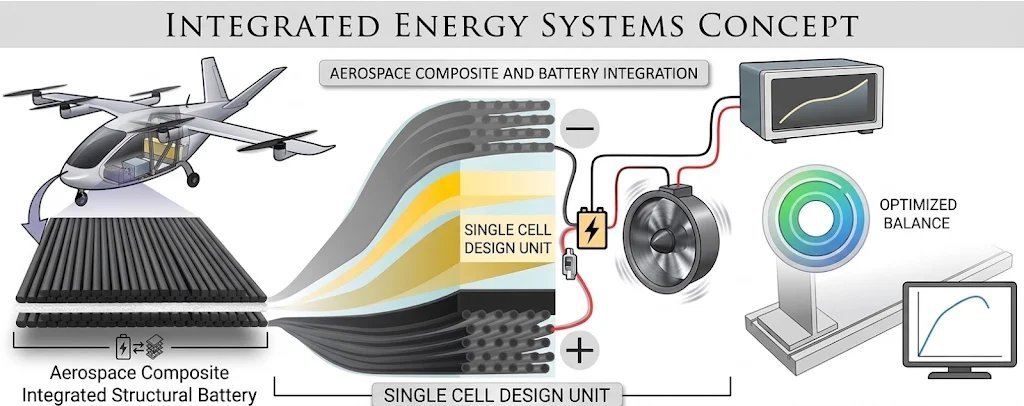
In modern electric aircraft and long-endurance unmanned aerial vehicles, battery packs constitute up to 45% of total gross takeoff weight while contributing zero structural stiffness. Mechfort’s flagship Structural Battery research program revolutionizes vehicle design by engineering multifunctional composite materials where load-bearing structural skin and energy storage cells are consolidated into a single monolithic composite architecture.
The Tri-Functional Carbon Fiber Anode Architecture
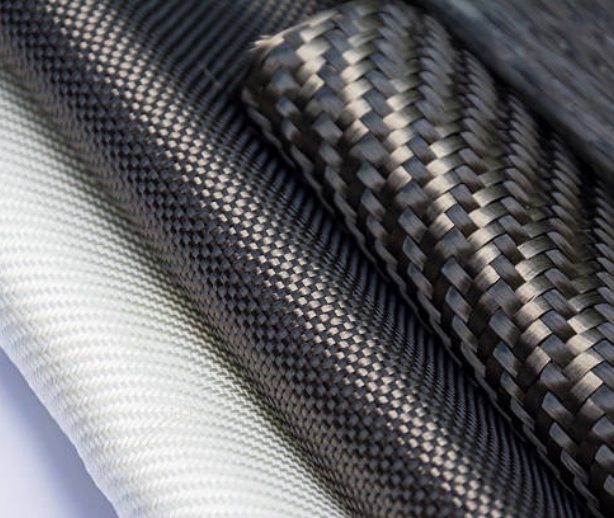
In our structural battery cells, continuous polyacrylonitrile-based carbon fibers fulfill three simultaneous roles: they provide high tensile modulus (>230 GPa) to resist airframe bending moments, act as current collectors, and serve as intercalation hosts for lithium ions. By coating individual fibers with nanoscale solid polymer electrolyte shells, lithium ions insert into the turbostratic carbon lattice with minimal volumetric expansion.
Bicontinuous Electrolyte Chemistry & Cell Cycling
The core materials challenge lies in synthesizing a matrix that combines structural load transfer with rapid ionic transport. Mechfort formulates bicontinuous structural electrolytes consisting of a rigid vinyl ester / epoxy scaffolding intertwined with an ionic liquid / lithium salt conductive phase. Prototype pouch cells demonstrate 140 Wh/kg specific energy while retaining 88% flexural rigidity under continuous mechanical vibration.
Interested in Composites & Material Innovation?
Mechfort delivers turnkey industrial engineering, custom laboratory pilot plants, and scalable contract manufacturing across these applications.