Part 1: What Is Extractive Metallurgy? The Journey from Ore to Ingot
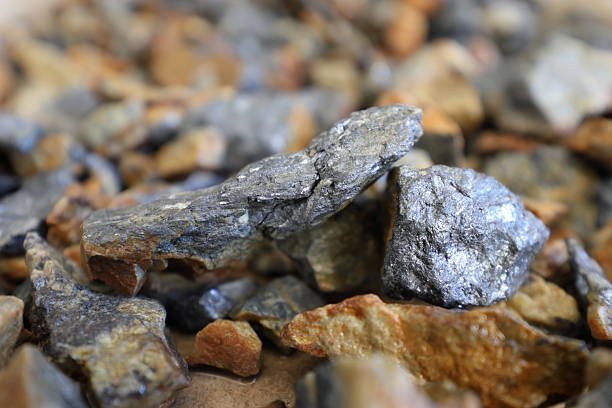
Look around the room you are sitting in right now. The copper wiring inside your walls, the steel frame of your chair, the aluminum casing of your laptop, and the tiny traces of gold and rare earth metals inside your smartphone all share the exact same origin: raw rock dug out of the ground. In nature, very few metals sit in the earth as pure, shiny nuggets. Instead, they are chemically locked inside minerals — bonded to sulfur, oxygen, carbon, or silicon — and mixed together with huge volumes of worthless rock that geologists and engineers call gangue. Extractive metallurgy is the science and engineering of freeing those metals from rock and turning them into pure, usable materials. Everything that happens between the mining pit and the finished metal ingot falls under this field.
The Four Steps Every Metal Takes:\n1. Mining: Blasting, excavating, and hauling ore out of the ground.\n2. Mineral Processing: Crushing, grinding, and physically separating the valuable mineral grains from the waste rock to create a richer concentrate.\n3. Extraction: Using heat, water-based chemicals, or electricity to break the chemical bonds holding the metal inside the mineral.\n4. Refining: Stripping away the last remaining impurities to achieve industrial purity — often 99.9% to 99.99% pure metal.
The Three Ways to Extract a Metal:\n• Pyrometallurgy (Extraction Using Heat): Uses intense heat—often above 1,000°C—to melt ore with fluxes so heavy molten metal sinks while lighter waste floats as glassy slag. Best for rich sulphide concentrates of iron, copper, nickel, and lead.\n• Hydrometallurgy (Extraction Using Water-Based Solutions): Dissolves target metals using liquid solutions such as mild acids, alkalis, and solvent extraction (SX) at room temperature up to 250°C. Best for low-grade ores, oxidized copper deposits, gold, lithium, and rare earths.\n• Electrometallurgy (Extraction Using Electricity): Uses electrical current to plate metal ions out of chemical solutions or molten salts directly onto pure metal cathodes. Essential for aluminum, zinc, and 99.99% copper cathodes.
Part 2: Getting the Ore Ready — Crushing, Grinding, and Froth Flotation
A newly mined copper ore might contain less than 1% copper; the other 99% is barren rock. Shipping all that waste rock to a smelter would burn huge amounts of fuel for almost no metal. Mineral processing solves this problem at the mine site by upgrading the ore into a concentrate containing 25% to 30% copper (or more) before any smelting begins.
Step 1: Crushing and Grinding (Liberation)\nBefore you can separate a valuable mineral from waste rock, you must physically break them apart — a process engineers call liberation. Massive jaw crushers and cone crushers squeeze dry boulders down from a meter wide to pebbles smaller than 10–20 mm. The crushed pebbles are then fed into tumbling mills with water. Ball mills filled with steel balls cascade to grind ore down to fine powder (75–150 µm—about the width of a human hair), while rod mills use parallel steel rods to prevent over-grinding brittle minerals into unrecoverable slimes.
Step 2: Froth Flotation — Separating Minerals with Bubbles\nFroth flotation is mineral processing’s masterstroke. The ground ore slurry is piped into flotation cells and treated with chemical collectors (like xanthates). The collector molecules attach specifically to valuable sulphide mineral surfaces, making them hydrophobic (water-repellent), while waste gangue stays hydrophilic (water-loving). Air bubbles injected into the bottom of the cell rise through the slurry; the hydrophobic mineral grains cling to the rising bubbles and form a thick, mineral-rich froth at the surface that overflows for collection, while waste rock sinks to the bottom as tailings.
Part 3: Turning Concentrate into Pure Metal — Roasting, Smelting, and Refining
Once mineral processing has produced a concentrate, chemical extraction begins. In pyrometallurgical processing of copper and base metals, concentrate travels through three sequential thermal operations:
1. Roasting: Heating concentrate in air below its melting point. Oxygen replaces sulfur, driving off sulfur dioxide gas (SO2), which is captured to produce sulfuric acid for industrial use.\n2. Smelting: In a flash or reverberatory furnace at ~1,200°C, concentrate melts alongside silica fluxes. Chemical reactions separate the molten mixture into two immiscible liquids: a dense, copper-iron matte layer on the bottom and a lighter, molten silicate slag on top that is tapped and discarded.\n3. Converting & Fire Refining: Molten matte is blown with oxygen to oxidize remaining iron and sulfur, yielding "blister copper" at ~98.5% purity.
Final Electrorefining to 99.99% Purity:\nBlister copper is cast into heavy anode plates and submerged into an electrolytic bath of copper sulfate and sulfuric acid alongside thin stainless steel cathodes. Applying an electric current causes copper atoms in the anode to dissolve into the acid as ions and migrate across to deposit onto the cathode as 99.99% pure copper. Precious metals (gold, silver, platinum) do not dissolve and settle to the tank bottom as valuable anode slimes.
Part 4: How Everyday & High-Tech Metals Are Made
Different metals demand radically different thermodynamic extraction pathways based on their chemical reactivity:
• Iron and Steel: Hematite and magnetite ores are fed into giant blast furnaces with metallurgical coke and limestone. Hot air blasts convert coke into carbon monoxide, which strips oxygen from the iron oxide to produce molten pig iron at ~1,500°C. Alternatively, Direct Reduced Iron (DRI) plants use natural gas or hydrogen to produce sponge iron for electric arc furnaces with up to 95% lower carbon emissions.\n• Aluminum: Bauxite ore is first purified into pure alumina powder (Al2O3) via the chemical Bayer process. Because aluminum bonds extremely tightly to oxygen, it cannot be smelted with carbon. Instead, the Hall–Héroult process dissolves alumina in molten cryolite at 960°C and passes massive electric currents through carbon anodes, reducing aluminum ions into molten metal that pools at the cell bottom.\n• Gold: Because gold is often present in microscopic traces (a few grams per ton of rock), it is extracted through hydrometallurgy. Crushed ore is leached with very dilute sodium cyanide solutions to dissolve gold into liquid. Activated carbon then adsorbs the gold, which is stripped with hot caustic solution and electrowon onto steel wool to be smelted into gold doré bullion bars.\n• Rare Earth Elements (REEs): Elements like neodymium, dysprosium, and praseodymium are chemically almost identical. Concentrated ores undergo roasting with concentrated sulfuric acid (acid cracking) followed by water leaching. The resulting mixed solution is passed through hundreds of continuous liquid-liquid solvent extraction mixer-settlers to separate each individual rare earth into high-purity oxides for permanent magnets and defense lasers.
Interested in Mining & Metallurgy?
Mechfort delivers turnkey industrial engineering, custom laboratory pilot plants, and scalable contract manufacturing across these applications.